Welcome

Welcome to the new blog spot of Sondela Academy.

Monday, 18 January 2016


My Experience at the Avalon Campus

I must say that the opportunity I had to go to Montagu and work at the Victorian Hotel where I had to manage and run the hotel and working at Avalon Springs where my duties where in between housekeeping and the restaurant, I had learned a lot. First of all I would like to thank Sondela and each person who supported me during this experience and challenge. The greatest lesson I learned during this experience is that when entering the business and “grown-up” world you deal with huge responsibilities. There is also no more time for you to make mistakes as each mistake will cost the business money, but we aren’t perfect and if mistakes are made you should take responsibility for it and admit you were wrong. The scary part is when you handle such huge responsibilities you also have to make decisions, these decisions can be impulsive if you have to make them quickly but you always have to think of the consequences because each decision you make will also affect the business in some or other way.

 I am very grateful for this opportunity I had because know I can have a new perspective on life and that everything is not always as it seems. As the old saying goes: “don’t judge a book by its cover”. No matter where you are in life always be grateful for each opportunity and make the best of it, if you are experiencing negativity in the workplace never think that another place will be better because in the end each place has its ups and downs, you just have to make the best of what you’ve got!

Thursday, 14 January 2016


Last weekend at Nylstroom the annual "Druiwe fees" took place.
Our students had the opportunity to be part of the festival to market Sondela and Sondela Academy.
Tracy Morris is one of our 2016 specialization year students busy working at the stall.

Well done!

Monday, 4 January 2016


Dear old Santa made a stop here on Sondela to suprise the children. From driving in on a golf cart, because the raindeer were getting too hot. Singing along christmas songs and handing out gifts to the children. It was a special moment for all.

Wednesday, 23 December 2015

Sondela Stargazing Excursions


During the December holiday, stargazing excursions are being presented at Sondela every Wednesday evening. These excursions depart at around 18h30 from the Reception parking area. A short game drive is conducted on the way to the “Springbok flats” area, during which basic orientation is explained. After sunset the focus turns to the skies and certain constellations are pointed out with a laser pointer and discussed. During this time of year, the constellation of Orion is particularly easy to find. Other constellations such as Crux (the Southern Cross), Taurus (the Bull) and Canis Major (the Large Dog)become visible soon after sunset. The moon is currently waxing and will be full on the 25th of December 2015, Christmas Day. The last time this happened was almost 40 years ago and another full moon will not be visible on December 25 until 2034.

Monday, 14 December 2015


 *Abraham Kriel Orphanage*

We had a visit from Abraham Kriel children's home. What an exciting time these children had. Iko de Villiers was all dressed up as Santa and he entertained the young children with donkey rides and giving out presents. There is nothing wrong with giving a little!!!

Sunday, 13 December 2015


With summer in full swing, everyone is feeling the heat!
Today our two companion animals, Choppie and Tinkerbell, went for a bit of a hair cut. 
Here we have Tinkerbell showing everyone her new look! 

Thursday, 10 December 2015


There is always time for kisses at the Sondela Wildlife centre!
We are also known as a Rehabilitation centre, looking after injured animals and also baby animals that can not look after themselves. We do our best to rehabilitate the animals as soon as they are strong enough to be released back into the wild . 
Here we have Lara Grové with two of our baby giraffes that love attention and feeding time of course!

Wednesday, 9 December 2015


Some of our students and staff did a snake handling course on Tuesday 8/12/15. Here we have Antonet Behr busy handling snakes and being tought how to work with a venomous snake .
Not something all people can do! 
Well done to each staff member and student that participated!

Monday, 7 December 2015


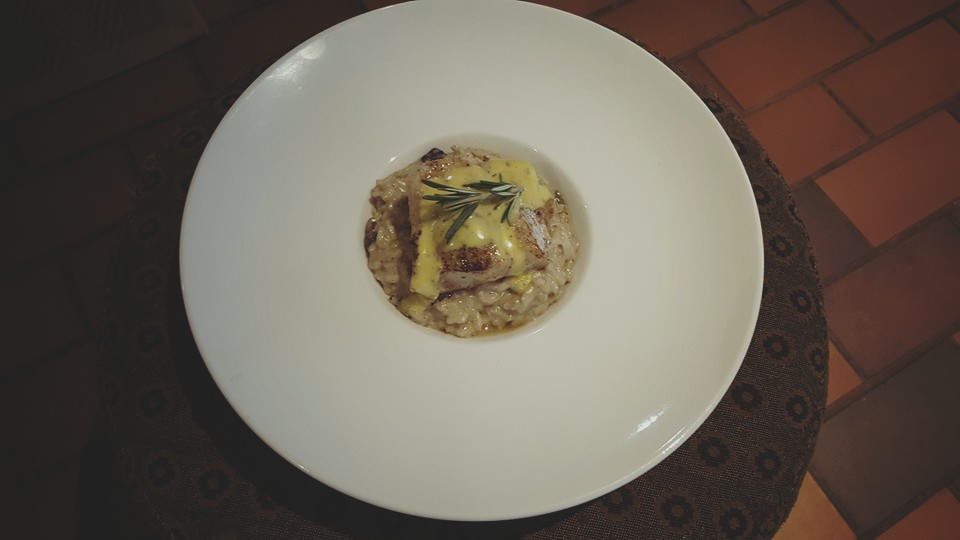
Our chef students get the chance to prepare their own dishes in our own training kitchen.Here we have - Mushroom Risotto, served with pan seared Kingklip, accompanied with Hollandaise.


Sondela Secretary Birds

The Secretarybird (Sagittarius serpentarius) was up-listed from Near-threatened to Vulnerable. BirdLife South Africa has thus initiated research on thesebirds in order to understand aspects of their biology, which will assist with their conservation. This research includes tracking the movements of birds using satellite tracking devices. With these devices the movement of individual birds can be determined in great detail (accurate locations to within 10m are provided every 15 minutes, from sunrise to sunset). This way it is possible to determine long distance movement patterns, habitat usage and territory sizes. Two juvenile birds have been fitted with such tracking devices on Sondela to date. The first bird became somewhat of a celebrity, as the tagging process was broadcasted on the SABC nature program “50/50”. The second bird was unfortunately lost due to predation. BirdLife SA is now looking to fit tracking devices also to adult birds and the Sondela pair might just be suitable for such a project. We shall keep you posted in this regard… 

Sunday, 29 November 2015


Sondela Rhino Conservation

Rhinos are in peril!

There are five species of rhinoceros found in the world namely, the White rhino (Ceratotherium simum), the Black rhino (Diceros bicornis), the Greater one-horned rhino or Indian rhino (Rhinoceros unicornis), the Sumatran rhino (Dicerorhinus sumatrensis) and the Javan rhino (Rhinoceros sondaicus). Two of these species, namely the White and Black rhino are found in Southern Africa. The populations of all five species haveseriously declined over the last few years, mostly as a result of poaching activities. Currently the population sizes of the different species are as follows:

White rhino:                                                       20,405
Black rhino:                                                         5,055
Indian rhino:                                                      3,333
Sumatran rhino:                                               Less than 100
Javan rhino:                                                        58 - 61

The Southern white rhino (Ceratotherium simum) was once on the brink of extinction with only around 50 individuals left in the wild! It was rescued mainly by efforts of Dr. Ian Player and Ezemvelo KZN Wildlife (formally known as the Natal Parks Board) and now numbers over 20,400 individuals. Few people are aware that White rhinos were actually extinct in the Kruger National Park and were reintroduced from Kwa-Zulu Natal (KZN). Sadly, however, there are currently only 3 remaining Northern white rhinos (Ceratotherium simum cottoni, a subspeciesformerly found in several countries in East and Central Africa south of the Sahara)in existence in the world!

Numerous conservation efforts have been initiated in order to protect and save these tanks of the animal kingdom. Conservation activities include anti-poaching and monitoring programmes, community conservation and environmental education programmes, demand reduction, capacity building, research, translocations, captive breeding and rehabilitation. Sondela Nature Reserve’s Wildlife Centre plays a very important role in this regard as it is not only a rehabilitation centre for orphaned baby rhinos, but also a quarantine facility and environmental education centre. To date Sondela Wildlife Centre has successfully rehabilitated 7 rhino calves (4 bulls and 3 cows).

In order to protect and conserve threatened,vulnerable, or endangered species, it might even be necessary to export them to countries outside their natural range, where they can be kept and bred within a captive environment. In this way a meta-population and genetic ‘bank’ can be established in order to manage the conservation of the species more effectively. Currently, rhinosare being exported (or there are plans to export in the very near future)to countries such as the USA, Europe, Singapore, Vietnam and Australia. Such actions are, with very good reason, governed by extremely strict legislation. The following, is according to the “Criteria to be met by the captive facilities/zoos wishing to acquire or keep the rhinoceros imported from South Africa” by Mrs. B.E.E. Molewa, MP (Minister of Water and Environmental Affairs):

To export live rhinoceros from South Africa, export permits are required in terms of the National Environmental Management: Biodiversity Act (NEMBA), 2004 (Act No. 10 of 2004) and the Convention on International Trade in Endangered Species of Wild Fauna and Flora (CITES). The Annotation to the CITES Appendix II listing of South Africa’s population of white rhinoceros states that live rhinoceros can be exported to appropriate and acceptable destinations. CITES Resolution Conference 11.20 defines the term “appropriate and acceptable destinations” as destinations where the Scientific Authority of the State of import is satisfied that the proposed recipient of a living specimen is suitably equipped to house and care for it. Moreover, the Minister of Water and Environmental Affairs is empowered in terms of Section 59 of NEMBA to advise organs of state on the effective implementation of international agreements.

The Minister and Members of Executive Council (MINMEC) responsible for the conservation of biodiversity in the province, have approved criteria on what is an appropriate and acceptable destination, and that which has to be met by the captive facilities wishing to acquire or keep rhinoceros imported from South Africa. These criteria are as follows:
·         The facility where the rhinoceros imported from South Africa will be kept must be an institutional member of the World Association of Zoos and Aquaria (WAZA), an affiliated member of WAZA (for instance, PAZAAB), or an accredited member of a regional zoo association recognised by the CITES Management Authority of the state of import as a reputable association. These associations must require the zoo or the captive facility to:
o   keep a high standard of husbandry and veterinary care;
o   maintain animal record systems;
o   contribute to conservation activities with written conservation action plans for the institution with specific reference to the rhinoceros;
o   contribute to the relevant scientific studies to improve the conservation status of the species, with specific reference to the rhinoceros;
o   promote education as a key component of the institution’s mission;
o   have a written policy that outlines the type of research that it conducts, with specific reference to the rhinoceros; and
o   develop a risk management plan that identifies and assesses potential risk regarding injury/harm to the specimen kept in the facility and the visiting public and employees.
·         Export for re-introduction purposes will only be approved if the export is in range states of the specific species to be introduced.
·         Both horns of the rhinoceros to be exported must be micro-chipped and DNA samples must be taken prior to export. The DNA samples must be sent to the Veterinary Genetics Laboratory at Onderstepoort for analysis and DNA banking.

In addition to adherence to the above-mentioned criteria, the following information is also required to be submitted in terms of Section 88(2)(a) of NEMBA, in order to permit applications for the export of live rhinoceros from South Africa to be considered by the relevant issuing authority:
·         A letter from CITES Management Authority of the importing country, indicating that the rhinoceros’ horns will not be used for commercial purposes, must be provided to the relevant issuing authority.
·         Written confirmation from CITES Scientific Authority of the importing country that the destination is appropriate and acceptable and that the facility is able to house and care for the rhinoceros in accordance with Resolution Conference 11.20.
·         Documentary proof that the rhinoceros’ horns have been micro-chipped and the DNA samples taken should accompany the permit application.


It is thus clear that rhino conservation is being very carefully managed not only nationally, but also internationally and Sondela prides itself in playing a very important and integral part in these efforts, in conjunction with other organisations.


 Fresh bread, buns & cheesebuns get hand made from scratch in our own Sondela Bakery we have in one of the kitchens on Sondela. Our chef students can tickle anyones taste buds with these delicious smells that come out the bakery every morning!

Friday, 27 November 2015


Spa Awards 2015 - Safari Spa Category Winners !

Seared Salmon, dish prepared by our 1st and 2nd year chef student. With them is our Executive Chef in black uniform, Jeanne Scheepers.

Thursday, 26 November 2015


Friday the 13th started like any other hot spring day but my day had a few more activities. Friday is the day that guest check in and get ready to be spoiled the whole weekend. For myself things were going to change, the reason was that I was called into the office and asked, if I wanted to be a private chef for guest that were checking into a Makhato house. It was  very exciting and scary at the same time, because it was a chance to show off my skills that I have learnt. I did not know what type of guests I was going to have to serve. To my surprise when I got there I found a very friendly couple waiting for me. I introduced myself  and we had a little conversation about what they would want for dinner . I then realized I was not cooking for 2 people but 14 people. I also then saw that they were here to celebrate a birthday party. I was told I could set up the menu for them. The scariest part was when I had to serve the food , I was not sure if the guests would like the food, but thanks to the Sondela chefs and students everything I have learnt paid off that weekend. It was a big success!! I now know that I can do anything if I put my mind to it .

Raseaka Ramokgopa

This was written by one of our 2nd Year Diploma Sondela Chefs.

Wednesday, 25 November 2015

Secret Santa


Secret Santa is being held this year for all our Sondela Students.

Monday, 9 November 2015

SHORT REPORT FROM ANRIKE DIPPENAAR

Sondela Wine Course
On 19 August we, the first group, started with a wine and serving wine course. This course was presented By Lesley Sutcliffe, From City and Guilds. This course was specifically focused on serving and presenting wine and to apply it to our place of work, Piccinini’s Restaurant. We were a good mixture between staff and diploma students.

I have to add that we learned a lot and especially the little detail that improved my knowledge concerning different varieties of wine, the appropriate terms and how to serve it correctly. Something I will always remember is: Champagne is a sparkling wine, but sparkling wine is not Champagne, as well as Cognac is brandy, but not all brandy is Cognac...

 Apart from the knowledge provided, we also had a lot of fun. We had the opportunity to open different types of bottles especially wines closed with corks, as well as a sparkling wine… and the anticipation that went with it!


I will do this again!!                                         -Anrike Dippenaar